
Jeux complets Python Drive
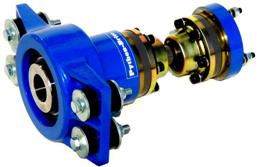
The Python-Drive is a complete propulsion system for yachts, sloops and workboats of all shapes and sizes.
After installation of a Python-Drive, periodic alignment of the engine to the propeller shaft is no longer necessary, annoying axial drive reactions between engine and propeller shaft are eliminated and the thrust pressure is transferred "softly" to the hull of the vessel by means of the special suspension of the thrust bearing in rubbers.
The heart of every Python-Drive is the maintenance-free homokinetic drive shaft, which in all versions is amply calculated for its task.
The thrust bearing is generously sized and maintenance free for all models. The thrust bearing is mounted using a clamping ring that centers the propeller shaft where it belongs; directly behind the homokinetic drive shaft. The homokinetic drive shaft ensures a constant rotational speed of the propeller shaft even at uneven angles and thus reduces wear and tear on rotating parts of the drive system. Another advantage of this system is the very short installation length. The Python-Drive is supplied with all the necessary installation materials such as an adapter flange for the most common gearbox types, a homokinetic drive shaft, a robust thrust bearing unit as well as all the bolts, nuts, lock washers and rubbers to absorb the thrust. Complete standard units are available for shaft diameters from 19 mm to 100 mm, including inch sizes. Tapered shaft fits can be supplied on request. Loose homokinetic drive shafts for torques of up to 1,500 Kgm ( approx. 14.7 kNm ) as well as standard longer shafts or special length shafts are also available.
The thrust bearings are also available as separate units and can easily be mounted at any position on the propeller shaft.
To determine the correct Python-Drive, the following calculation should be made:
(A:B) x 9680 x C = propeller shaft torque in Nm
A = maximum power of the motor in kW
B = maximum speed of the engine
C = reduction gearbox
Furthermore, the maximum thrust pressure (kN) given by the propeller must remain below the given maximum value.
Below some example applications.
TYPE PYTHON   HPs       R.P.M.      REDUCTION
P30-R         50        3000        2,5 : 1
P60-K         70        2600        3,0 : 1
P60-B         70        2600        3,0 : 1
P80-M         105       3000        3,0 : 1
P80-S         130       2400        2,0 : 1
P110-S        135       2700        3,0 : 1
P110-T        180       2400        2,0 : 1
P140-T        190       2500        2,5 : 1
P200-T        240       2300        2,5 : 1
P200-Q        250       2800        3,0 : 1
P200-W        275       2500        2,5 : 1
P501-Q        300       2000        3,0 : 1
P501-W        400       2200        3,0 : 1
P501-L        500       2200        3,0 : 1
| Article | Caractéristiques | Prix | |||
|---|---|---|---|---|---|
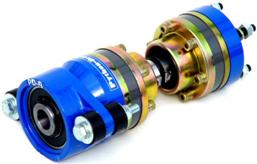 |
DIP30-R
|
TypeP30-R
Couple/réduction294 Nm
Diamètre de l’arbre19-30 mm
|
TypeP30-R
Couple/réduction294 Nm
Diamètre de l’arbre19-30 mm
Poussée max4,3 kN
|
€ 790,02
Stock0
|
|
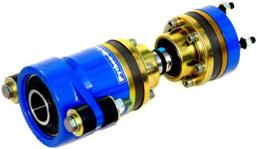 |
DIP60-K
|
TypeP60-K
Couple/réduction588 Nm
Diamètre de l’arbreDe 30 à 40 mm
|
TypeP60-K
Couple/réduction588 Nm
Diamètre de l’arbreDe 30 à 40 mm
Poussée max5,7 kN
|
€ 849,30
Stock0
|
|
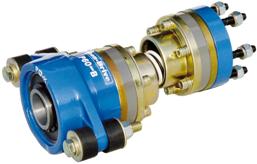 |
DIP60-B
|
TypeP60-B
Couple/réduction588 Nm
Diamètre de l’arbreDe 30 à 40 mm
|
TypeP60-B
Couple/réduction588 Nm
Diamètre de l’arbreDe 30 à 40 mm
Poussée max5,7 kN
|
€ 809,40
Stock0
|
|
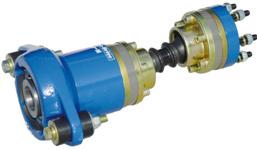 |
DIP80-M
|
TypeP80-M
Couple/réduction785 Nm
Diamètre de l’arbre30-45 mm
|
TypeP80-M
Couple/réduction785 Nm
Diamètre de l’arbre30-45 mm
Poussée max8 kN
|
€ 991,80
Stock0
|
|
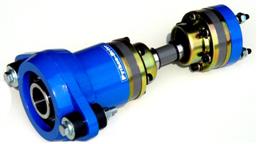 |
DIP80-S
|
TypeP80-S
Couple/réduction785 Nm
Diamètre de l’arbre30-45 mm
|
TypeP80-S
Couple/réduction785 Nm
Diamètre de l’arbre30-45 mm
Poussée max12 kN
|
€ 1.162,80
Stock0
|
|
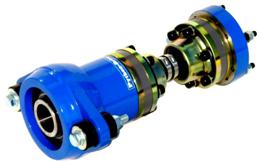 |
DIP110-S
|
TypeP110-S
Couple/réduction1080 Nm
Diamètre de l’arbre35-45 mm
|
TypeP110-S
Couple/réduction1080 Nm
Diamètre de l’arbre35-45 mm
Poussée max12 kN
|
€ 1.316,70
Stock0
|
|
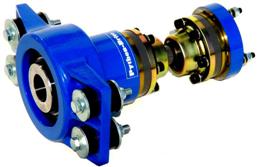 |
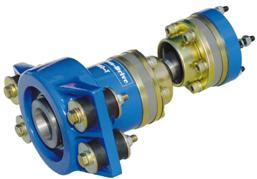
DIP110-T
|
TypeP110-T
Couple/réduction1080 Nm
Diamètre de l’arbre35-50 mm
|
TypeP110-T
Couple/réduction1080 Nm
Diamètre de l’arbre35-50 mm
Poussée max18 kN
|
€ 1.761,30
Stock0
|
|
 |
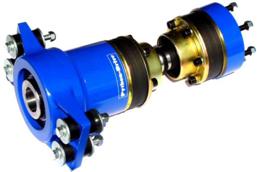
DIP140-T
|
TypeP140-T
Couple/réduction1370 Nm
Diamètre de l’arbre40-55 mm
|
TypeP140-T
Couple/réduction1370 Nm
Diamètre de l’arbre40-55 mm
Poussée max18 kN
|
€ 2.114,70
Stock0
|
|
 |
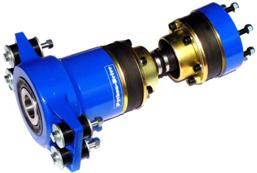
DIP200-T
|
TypeP200-T
Couple/réduction1960 Nm
Diamètre de l’arbre40-60 mm
|
TypeP200-T
Couple/réduction1960 Nm
Diamètre de l’arbre40-60 mm
Poussée max18 kN
|
€ 2.941,20
Stock0
|
|
 |
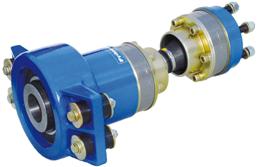
DIP200-Q
|
TypeP200-Q
Couple/réduction1960 Nm
Diamètre de l’arbre40-60 mm
|
TypeP200-Q
Couple/réduction1960 Nm
Diamètre de l’arbre40-60 mm
Poussée max22 kN
|
€ 3.260,40
Stock0
|
|
 |
DIP200-W
|
TypeP200-W
Couple/réduction1960 Nm
Diamètre de l’arbre50-60 mm
|
TypeP200-W
Couple/réduction1960 Nm
Diamètre de l’arbre50-60 mm
Poussée max30 kN
|
€ 3.819,00
Stock0
|
|
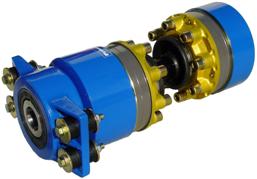 |
DIP501-Q
|
TypeP501-Q
Couple/réduction4900 Nm
Diamètre de l’arbre55-60 mm
|
TypeP501-Q
Couple/réduction4900 Nm
Diamètre de l’arbre55-60 mm
Poussée max22 kN
|
€ 5.768,40
Stock0
|
|
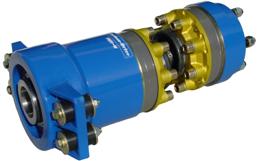 |
DIP501-W
|
TypeP501-W
Couple/réduction4900 Nm
Diamètre de l’arbre60-80 mm
|
TypeP501-W
Couple/réduction4900 Nm
Diamètre de l’arbre60-80 mm
Poussée max30 kN
|
€ 6.161,70
Stock0
|
|
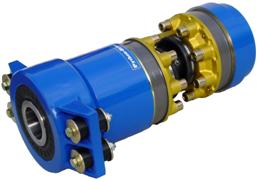 |
DIP501-L
|
TypeP501-L
Couple/réduction4900 Nm
Diamètre de l’arbre60-80 mm
|
TypeP501-L
Couple/réduction4900 Nm
Diamètre de l’arbre60-80 mm
Poussée max45 kN
|
€ 6.401,10
Stock0
|